ART DIRECTOR

ART DIRECTION THAT TRAVELS WITH THE WORK.

One team,one visual memory.

Build your art direction from the work you have.
Keep every delivery connected to the same decisions.

GAME ART / UI / BRAND & CAMPAIGN DESIGNRULES · SAMPLES · CREATION · DELIVERY

FROM REFERENCES TO DELIVERY

A few references.
A shared direction.

Follow one button task from the director’s rules to a teammate’s first sample, then through review and revision.

Illustrated workflow · Original candidate artwork · Pause to read

Download MP4 · 中文 ↗
Read the workflow

The director supplies existing work, references and notes. The agent drafts the rules and prepares representative samples for review. Confirmed decisions travel in the project pack. A teammate gives that complete pack to their own agent and describes a task. The agent uses its rules, references and version, then creates through the available tools. Review identifies specific differences and explains revisions. Shared issues return to the director for a new version.

INSTALL. THEN ASK.

The work happens
in your agent.

Use an Agent Skills-compatible tool such as Codex, Claude Code or Cursor. Solo creator? You can wear both hats below.

npx skills add https://github.com/NewenergyEric/art-director-skill

Core helpers need Python 3.10+. You can also download the Skill ZIP and ask your agent to install it.

I’m setting
the art direction.

Put existing work, references and review notes in a folder your agent can read. Start with what you have.

Use $art-director. Here are our designs, references and notes. Draft our art direction, then help me define the character, environment and UI requirements. Prepare samples for me to review and package the result for the team.

You get A substantive draft, decisions needing your input, a sample plan and a shareable project pack.
I’m creating
within the rules.

Give your agent the director’s complete project pack. It contains the project’s rules and materials.

Read this project pack. Create the default, pressed and disabled button states using its UI rules. Show me a first sample, explain which rules you used, and list anything still needing a check.

You get A versioned task, relevant references, a first sample and a check record. Creation uses the tools available in your agent.

THE CONTEXT GOES WITH YOU

A shared foundation.
Ready to hand over.

The material index, project brief, design rules, delivery checks and annotated references travel with the project Skill. Your team can work without the director’s original chat.

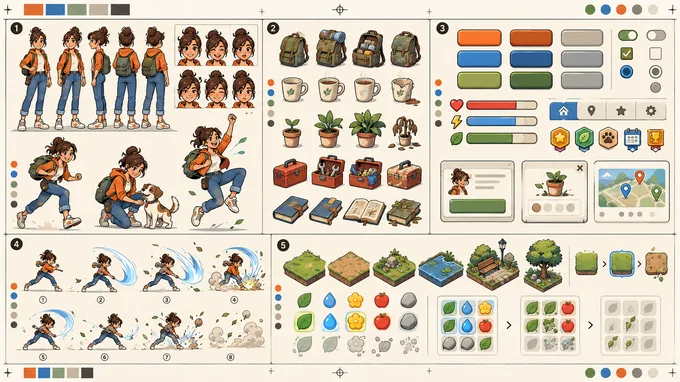
Runnable fictional drafts that show what a pack contains. Project-authored content stays in its original language; these are not approved production assets.

Can I build on an existing design system?

Yes. The agent starts with your current rules and samples, identifies gaps and helps you fill them. Discuss changes naturally; the agent keeps the guides and project pack in sync.

Who decides whether the design is good?

The director owns direction and release decisions. The Skill organizes the evidence, checks against the rules and explains revisions. Passing a technical check is separate from visual approval.

What happens when the project changes?

The director publishes a new version. New tasks use it; existing tasks keep their original versions so their rules do not shift midway.

THE GAME CREATOR WORKFLOW

Four roles.
One game worth making.

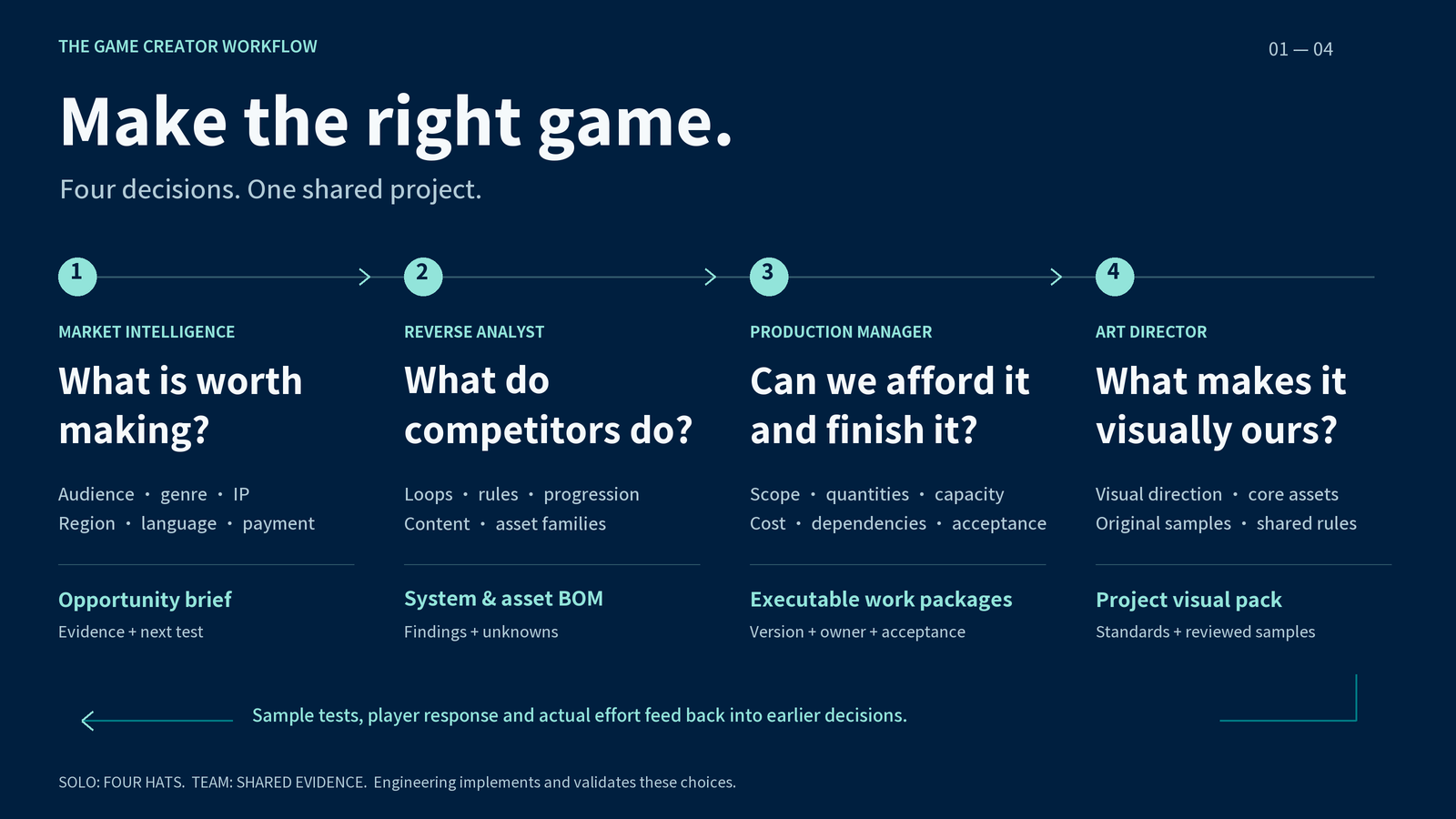
For solo creators, four hats. For teams, connected responsibilities. Start with the question you have; let evidence from the work improve the earlier decisions.

Market intelligence → competitor analysis → production assessment → original art direction. Samples, player response and actual effort feed back to earlier decisions.
  1. Market Intelligence ↗

    What is worth making?

    Opportunity brief · evidence + next test

  2. Reverse Analyst ↗

    What do competitors do?

    System & asset BOM · findings + unknowns

  3. Production Manager ↗

    Can we afford it and finish it?

    Work packages · scope + capacity + acceptance

  4. Art Director ↗

    What makes it visually ours?

    Project visual pack · original samples + rules

↶ Sample tests, player response and actual effort feed back into earlier decisions.

Engineering implements and validates these choices alongside art and content production. This map describes how the roles work together; it does not claim automatic orchestration.

See the handoffs and feedback ↗Open the full diagram ↗